The longevity of LTE-M: a bridge to the 5G future
In the rapidly evolving landscape of the Internet of Things (IoT), selecting the right connectivity standard is not just a technical decision—it’s a strategic investment. Among the leaders of Low Power Wide Area Networks (LPWAN), LTE-M (Long Term Evolution for Machines) stands out as a versatile and resilient technology. But as 5G Standalone (SA) networks begin to dominate the headlines, a critical question arises for enterprises: How long will LTE-M remain relevant?

LTE-M: Designed for the long haul
According to recent insights from IoT Business News (March 2026), LTE-M was built with longevity in mind. Unlike previous cellular generations, LTE-M is a software-defined evolution of existing 4G infrastructure. This means it doesn't require entirely new hardware at the base station level, allowing operators to maintain and upgrade it with minimal capital expenditure.
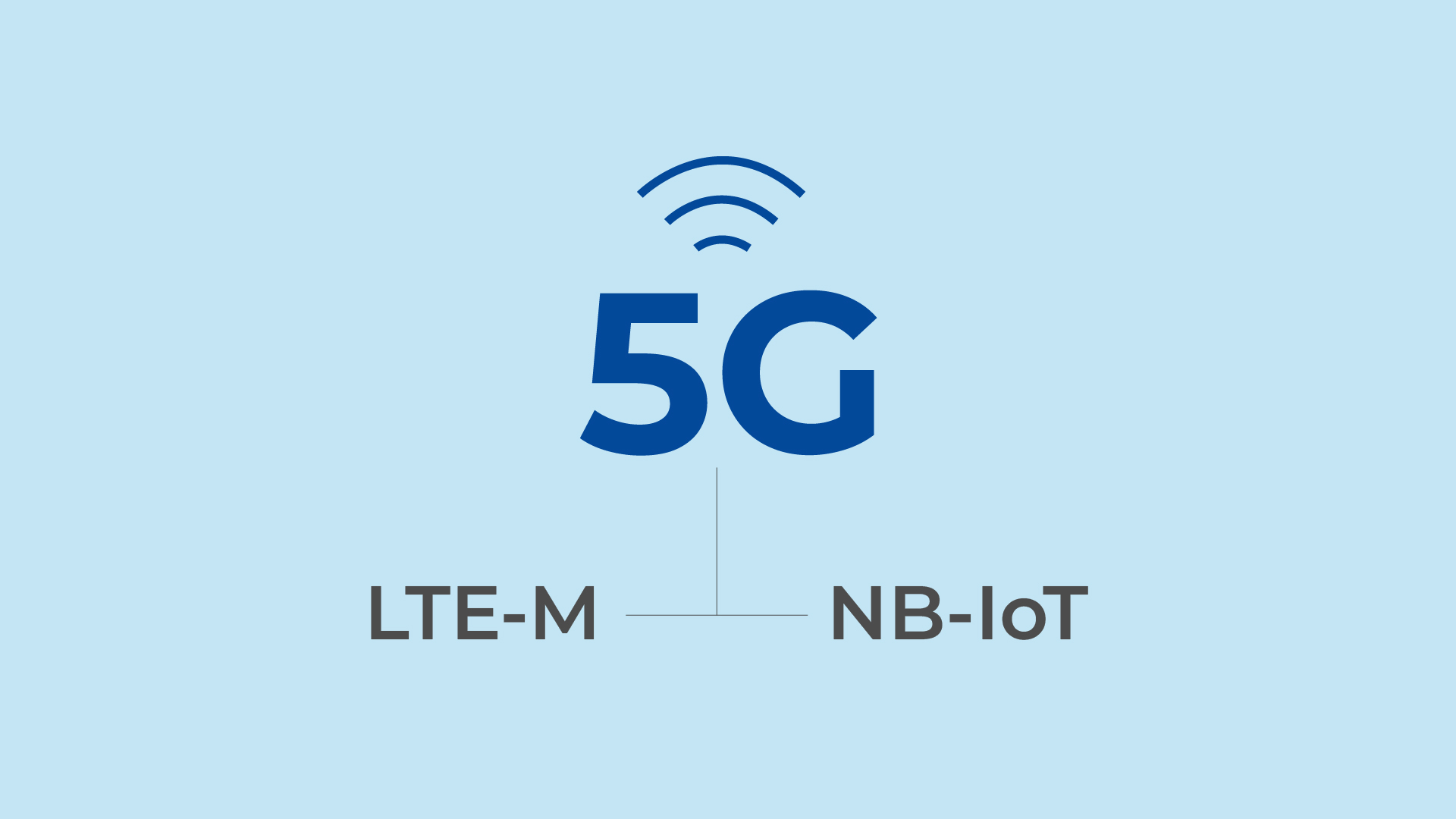
Data from Transforma Insights highlights that LTE-M and its counterpart, NB-IoT, are now officially recognized as part of the 5G family. Under the 3GPP specifications, these technologies fulfil the requirements for mMTC (massive Machine Type Communications), ensuring they are not "legacy" technologies being phased out, but rather core components of the 5G roadmap.
5G compatibility and the "coexistence" strategy
One of the most significant advantages of LTE-M is its forward compatibility. As mobile operators transition from 4G to 5G, they are utilizing a technique called Dynamic Spectrum Sharing (DSS). This allows LTE-M signals to coexist within the same frequency bands as 5G New Radio (NR).
- In-Band Deployment: LTE-M can be deployed "in-band" within a 5G carrier, meaning a device using LTE-M today will continue to function even as the underlying network evolves into a full 5G environment.
- The Role of RedCap: While 5G RedCap (Reduced Capability) is emerging for mid-tier applications (like wearables), it is not a replacement for LTE-M. LTE-M remains the superior choice for ultra-low power consumption and deep indoor coverage.
North America: The LTE-M powerhouse
In North America, giants like AT&T and Verizon have bet heavily on LTE-M. Due to the early sunset of 2G and 3G networks in the region, LTE-M has become the de facto standard for mobile IoT applications.
- Operator Outlook: North American carriers view LTE-M as a long-term solution (2035+) because of its support for mobility, which are crucial for the region's massive logistics and fleet management sectors.
- Investment Protection: Having invested billions in upgrading tower hardware for LTE-M between 2017 and 2022, carriers are economically incentivized to sweat these assets for at least two decades.
In North America, LTE-M is the preferred choice for critical infrastructure: smart grids, water metering, and asset tracking for logistics.
- Deployment Cycles: According to Transforma Insights, industrial IoT devices deployed today (2024–2026) are expected to have a field life of 10 to 15 years.
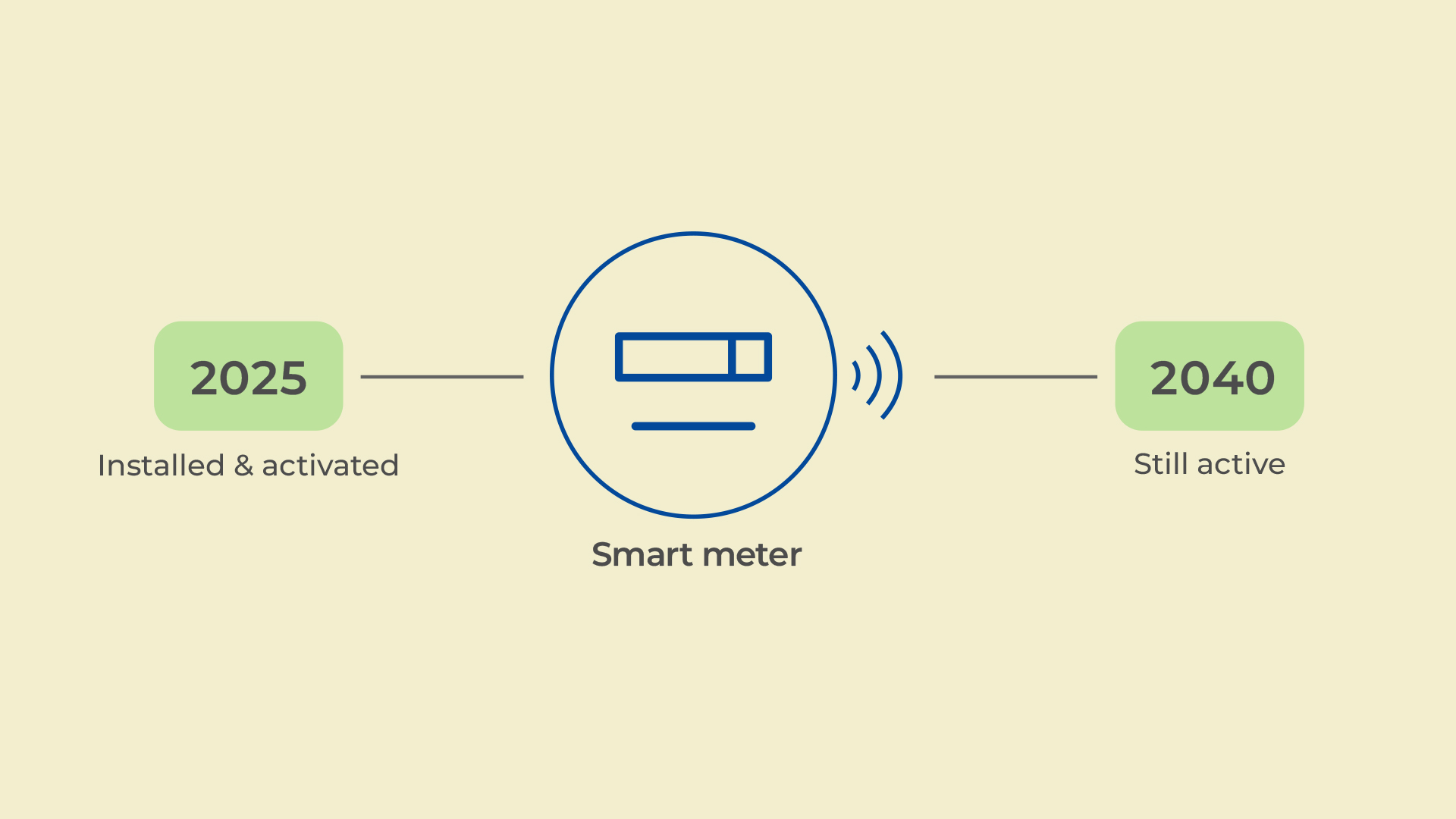
- The 2040 Math: A smart meter installed in 2025 must remain functional until at least 2040 to satisfy ROI requirements for utility companies. North American operators have provided public assurances to these enterprise customers that the network "heartbeat" will remain active to match these hardware lifecycles.
Europe: A diversified landscape
Europe presents a more fragmented but rapidly maturing market. While many European operators initially prioritized NB-IoT for stationary applications (like smart metering), the tide is turning.
- Expansion in 2024-2026: According to GSMA Intelligence data cited by tech analysts, European operators (such as Orange, Telefonica, and Deutsche Telekom) are increasingly activating LTE-M roaming agreements to support cross-border tracking.
- Operator Outlook: In Europe, LTE-M is often deployed alongside NB-IoT to offer a "dual-mode" safety net. European carriers are committed to supporting these standards well into the next decade to align with the European Union’s digitalization goals for Industry 4.0.
Global market share: The rise of APAC
While North America holds a significant revenue share (34.1%), the Asia-Pacific (APAC) region has surged to become the largest market by volume, accounting for 54.4% of global LTE IoT revenue in 2026 (Mordor Intelligence).
Asia-Pacific: The "Dual-Stack" strategy
In APAC, the strategy differs from the North American "LTE-M first" approach. Countries like Japan, South Korea, and Australia have adopted a dual-stack model, deploying both NB-IoT and LTE-M nationwide.
- Japan & South Korea: Operators like KDDI and SK Telecom are using LTE-M for high-value mobile assets (logistics and wearables) while reserving NB-IoT for static sensors. According to Market.us Scoop (2026), active IoT devices in Japan are expected to grow by over 90% through 2030, with LTE-M providing the necessary mobility for urban "Smart City" services.
- Australia: Telstra and Optus have leveraged LTE-M’s massive range (up to 100km in some rural tests) to cover the vast Australian outback, making it the primary choice for AgTech and mining.
Latin America: The growth frontier
Latin America is currently the fastest-growing region for IoT device connections, with a projected increase of 140% by 2030 (Market.us Scoop).
- Brazil & Mexico: These markets are transitioning directly from legacy 2G to LTE-M to support a massive wave of Smart Metering. ResearchAndMarkets (2026) highlights that utility giants in Brazil (like Enel and CPFL) are investing heavily in LTE-M because it offers the deep indoor penetration needed for urban meters without the latency issues of older technologies.
Middle East & Africa (MEA): Industrial transformation
The MEA region is expanding at a 19.12% CAGR (Mordor Intelligence), driven by "Vision 2030" style industrial projects in the Gulf.
- Intention: Operators in the UAE and Saudi Arabia are positioning LTE-M as the foundation for Private LTE networks in oil, gas, and maritime logistics. The goal is to provide a "5G-ready" bridge for industrial hubs that aren't yet ready for full 5G Standalone (SA) complexity.
2026 Breakthrough: The satellite integration
A pivotal development for LTE-M’s global longevity is its integration with Non-Terrestrial Networks (NTN).
According to IoT Business News (March 2026), new chipsets now allow LTE-M devices to switch seamlessly between terrestrial cell towers and LEO (Low Earth Orbit) satellites.
This "Hybrid Connectivity" solves the world's biggest IoT problem: Dead zones. By allowing an LTE-M tracker to work in the middle of the Atlantic or the Sahara via satellite, the technology’s relevance is extended indefinitely, as it becomes the universal language for global roaming.

The final verdict: A global strategy for the 2040 horizon
The synthesis of data from Transforma Insights, IoT Business News, and regional market analyses confirms that LTE-M is not merely a transitional technology, but the permanent low-power foundation of the 5G era. Whether in the dense urban centres of Tokyo or the vast logistics corridors of North America, its longevity is anchored by three global pillars:
- The North American Fortress: Due to the early retirement of 2G/3G and massive carrier investment, LTE-M has become the "indestructible" standard for the region. With industrial lifecycles requiring 15-year operational windows, North American operators have effectively locked in support through 2040.
- The 5G "mMTC" Identity: Technically, LTE-M is 5G. By fulfilling the 3GPP requirements for massive Machine Type Communications, it coexists within 5G spectrum via Dynamic Spectrum Sharing (DSS). This ensures that as 4G fades, the LTE-M signal remains active within the 5G New Radio (NR) environment.
- Global Hybrid Evolution: In the "Rest of the World," the 2026 breakthrough of Satellite-integrated NTN (Non-Terrestrial Networks) has removed the final barrier: coverage. By allowing LTE-M devices to switch between cell towers and LEO satellites, the technology has achieved a "universal" status that newer, high-frequency 5G standards cannot yet match for low-power, global roaming.
Details
The landscape of smart cities, utilities, security systems, and device manufacturing is rapidly evolving.